
Training materials: Difference between revisions
mNo edit summary |
mNo edit summary |
||
| Line 1: | Line 1: | ||
This section provides educators and students with evidence-based materials—including comprehensive workbooks and interactive media—to help identify indoor air pollutants and implement practical strategies for cleaner air in schools and homes. | |||
== [https://zenodo.org/records/18556574 '''Teacher's Guide and Diploma'''] == | == [https://zenodo.org/records/18556574 '''Teacher's Guide and Diploma'''] == | ||
| Line 10: | Line 11: | ||
}} | }} | ||
This | This comprehensive Teacher’s Guide provides the pedagogical framework for integrating Indoor Air Quality (IAQ) into school curricula for students aged 5 to 18. It serves as a roadmap for the student workbooks, offering: | ||
* Instructional Support: Step-by-step guidance for conducting classroom experiments and interactive exercises. | |||
* Scientific Background: Deep dives into the health impacts and environmental links of key pollutants, including Carbon Dioxide, Ozone, Particulate Matter, and Volatile Organic Compounds. | |||
* Certification: Includes an official EDIAQI Diploma to be granted to students upon completion of their IAQ learning modules. | |||
<div style="clear: both;"></div> | <div style="clear: both;"></div> | ||
| Line 26: | Line 28: | ||
}} | }} | ||
Designed for primary school students, this workbook uses active learning to internalize complex environmental concepts. Key features include: | |||
* Guided Observation: Tasks to help children identify pollution sources in their immediate daily environments. | |||
* Hands-on Experiments: Simple activities such as "particle detection" to make invisible pollutants visible. | |||
* Creative Synthesis: Exercises in poster-making and word searches to reinforce knowledge about healthy indoor habits | |||
<div style="clear: both;"></div> | <div style="clear: both;"></div> | ||
| Line 42: | Line 45: | ||
}} | }} | ||
Tailored for secondary students, this workbook transitions from awareness to technical mitigation and engineering solutions. Highlights include: | |||
* Technical DIY Projects: Detailed instructions for building a Corsi-Rosenthal Box (Comparetto Cube)—a low-cost, high-efficiency air purifier made from MERV-13 filters and a box fan. | |||
* Multi-Pollutant Analysis: Advanced explanations of how indoor activities (printers, cleaning products, tobacco) contribute to multipollutant body burdens. | |||
* Critical Thinking: Activities that challenge students to analyze the relationship between ventilation rates and inhabitant health. | |||
<div style="clear: both;"></div> | <div style="clear: both;"></div> | ||
Revision as of 12:08, 17 February 2026
This section provides educators and students with evidence-based materials—including comprehensive workbooks and interactive media—to help identify indoor air pollutants and implement practical strategies for cleaner air in schools and homes.
Teacher's Guide and Diploma
This comprehensive Teacher’s Guide provides the pedagogical framework for integrating Indoor Air Quality (IAQ) into school curricula for students aged 5 to 18. It serves as a roadmap for the student workbooks, offering:
- Instructional Support: Step-by-step guidance for conducting classroom experiments and interactive exercises.
- Scientific Background: Deep dives into the health impacts and environmental links of key pollutants, including Carbon Dioxide, Ozone, Particulate Matter, and Volatile Organic Compounds.
- Certification: Includes an official EDIAQI Diploma to be granted to students upon completion of their IAQ learning modules.
Workbook 5-12
Designed for primary school students, this workbook uses active learning to internalize complex environmental concepts. Key features include:
- Guided Observation: Tasks to help children identify pollution sources in their immediate daily environments.
- Hands-on Experiments: Simple activities such as "particle detection" to make invisible pollutants visible.
- Creative Synthesis: Exercises in poster-making and word searches to reinforce knowledge about healthy indoor habits
Workbook 12-18
Tailored for secondary students, this workbook transitions from awareness to technical mitigation and engineering solutions. Highlights include:
- Technical DIY Projects: Detailed instructions for building a Corsi-Rosenthal Box (Comparetto Cube)—a low-cost, high-efficiency air purifier made from MERV-13 filters and a box fan.
- Multi-Pollutant Analysis: Advanced explanations of how indoor activities (printers, cleaning products, tobacco) contribute to multipollutant body burdens.
- Critical Thinking: Activities that challenge students to analyze the relationship between ventilation rates and inhabitant health.
Animated video
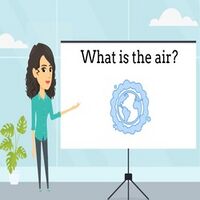
This short introductory video is designed to help teachers present the basic concepts of indoor air quality to students in a simple and engaging way.
The video explains what air is, how it can become polluted, the main indoor air pollutants (such as CO₂, ozone, particulate matter and VOCs), and why clean air is essential for human health and well-being. It also highlights everyday actions that can help improve air quality in classrooms, homes, and other indoor spaces.
Teachers can use this video at the beginning of a lesson to introduce the topic, encourage discussion, and prepare students for the workbook activities. It serves as an accessible and motivating resource to raise awareness about air quality and promote healthy habits from an early age.