
Training materials: Difference between revisions
mNo edit summary |
|||
| Line 8: | Line 8: | ||
· Animated video: https://zenodo.org/records/18415924 | · Animated video: https://zenodo.org/records/18415924 | ||
== | == Teacher's Guide and Diploma == | ||
{{Side box | {{Side box | ||
| bodystyle = width: 250px; float:right; clear:right; | | bodystyle = width: 250px; float:right; clear:right; | ||
| title = EDIAQI Project | | title = EDIAQI Project | ||
| image = [[File:training_teacher- | | image = [[File:training_teacher-guide_250x250.jpg|200px|link=https://zenodo.org/records/18556574]] | ||
| below = | | below = | ||
'''Link''' | '''Link''' | ||
| Line 18: | Line 18: | ||
}} | }} | ||
This Teacher’s Guide has been developed within the framework of the EDIAQI Project | This Teacher’s Guide has been developed within the framework of the EDIAQI Project to support the educational workbook designed for children aged 5 to 12 years old. Its main goal is to help educators integrate the topic of indoor air quality (IAQ) into classroom activities in an accessible, structured, and engaging way. | ||
The guide provides scientifically grounded explanations, key background information on indoor air pollutants (such as carbon dioxide, ozone, particulate matter, and volatile organic compounds), and their sources, effects on health, and links to environmental sustainability and public health. It also includes step-by-step instructions for conducting classroom activities, experiments, and interactive exercises featured in the student workbook. | The guide provides scientifically grounded explanations, key background information on indoor air pollutants (such as carbon dioxide, ozone, particulate matter, and volatile organic compounds), and their sources, effects on health, and links to environmental sustainability and public health. It also includes step-by-step instructions for conducting classroom activities, experiments, and interactive exercises featured in the student workbook. | ||
<div style="clear: both;"></div> | <div style="clear: both;"></div> | ||
Revision as of 09:58, 17 February 2026
EDIAQI TRAINING MATERIALS
· Teacher's Guide and diploma: https://zenodo.org/records/18556574
· Workbook 5-12: https://zenodo.org/records/18558206
· Workbook 12-18: https://zenodo.org/records/18557425
· Animated video: https://zenodo.org/records/18415924
Teacher's Guide and Diploma
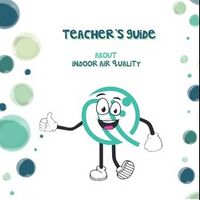
This Teacher’s Guide has been developed within the framework of the EDIAQI Project to support the educational workbook designed for children aged 5 to 12 years old. Its main goal is to help educators integrate the topic of indoor air quality (IAQ) into classroom activities in an accessible, structured, and engaging way.
The guide provides scientifically grounded explanations, key background information on indoor air pollutants (such as carbon dioxide, ozone, particulate matter, and volatile organic compounds), and their sources, effects on health, and links to environmental sustainability and public health. It also includes step-by-step instructions for conducting classroom activities, experiments, and interactive exercises featured in the student workbook.